
Chapter 1 · Mixed pyramid cascade
Smash Fest Level 7 Guide — Build a Four-Row Pyramid Cascade
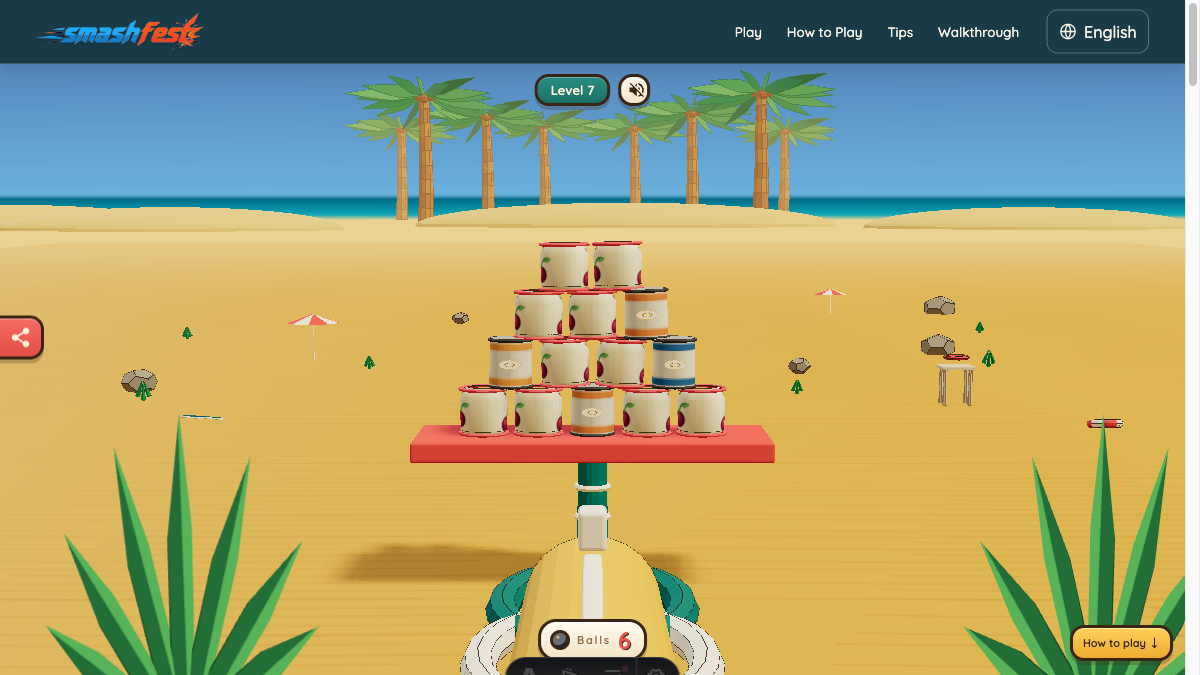
Level 7 is a four-row pyramid containing 14 glass and tin objectives. The footprint spans five nominal columns, the structure rises a little over four world units, and you have six cannonballs with a par of three. The selected strategy is cascade, so the main opportunity is to make falling upper pieces continue the work started at the base.
This pyramid is taller and more material-diverse than Level 3. Glass can disappear during the chain, but tin may fall into a stable pile instead of clearing. The first shot should open a lower side or inner-base contact that gives the upper rows room to travel. Shots two and three then address whichever support zone or tin remnant resists the cascade.
Cannonballs
6Materials
Glass · TinPar
3Targets
14Read height, base width, and mixed material
Four rows provide meaningful potential energy. The upper targets can fall through several contacts once a lower path opens. The broad five-column base still prevents a top-first shot from changing the whole structure. Because the targets include both glass and tin, track whether a falling piece actually cleared or simply relocated to the platform.
Think of the pyramid as two lower shoulders, an inner core, and narrowing upper rows. A lower shoulder shot can start a diagonal chain through the core. The opposite shoulder is a likely second structural target. Shot three remains available for tin that collected at the base or glass isolated after the cascade.
Opening plan: start a diagonal chain
Choose a low target one step in from an outer edge. A contact that is too central can drop both sides into a compact pile, while a hit at the extreme outside may move only one base piece. The near-side inner base gives the upper pyramid a diagonal path across the formation.
After impact, wait through every stage: initial break or push, upper-row rotation, secondary collision, and final tin rolling. Only when the target counter and movement stop should you decide whether the opposite base, the central remnant, or an isolated target deserves shot two.
Step-by-step Level 7 plan
Open one inner shoulder
Aim low, slightly inside the outermost base target. Fire one ball so the gap points through the center rather than completely away from the pyramid.
Follow the cascade from top to base
Watch glass break and tin descend through the opened side. Delay the next shot until rolling cans and falling upper pieces are fully resolved.
Remove the stable support zone
If the opposite shoulder remains stacked, aim low there. If both shoulders fell, redirect shot two to the lowest support of the central remnant.
Use shot three for separated material cleanup
Directly contact isolated glass. Push stable tin toward open space through its center. Keep the remaining three balls as recovery after a full settle.
Why a cascade matters more in four rows
Every additional row adds height that gravity can convert into downward and sideways movement. Opening a lower diagonal path lets several upper targets enter new contacts, giving glass opportunities to break and tin opportunities to gain displacement. The cannonball starts the process; the pyramid's stored height continues it.
The off-center opening also preserves a direction. A perfectly central collapse can stack material on itself. A diagonal chain moves targets across and outward, making edges more useful and reducing the chance that all surviving tin collects in one dense central group.
Alternative when glass clears but tin remains
If the cascade removes most glass and leaves a low tin cluster, stop aiming at the former pyramid shape. Find the cluster's center of mass and push from its inner side toward the nearest edge. One patient lateral shot can move several cans; rapid individual hits often scatter them into separate cleanup problems.
Common Level 7 mistakes
Starting with the apex
The top has height but no control over the broad base. Removing it does not open a cascade path.
Collapsing everything inward
A central pile can preserve tin objectives. Use an off-center opening to give movement a direction.
Counting broken glass as a full clear
Tin may still be live underneath the fragments. Verify the objective counter after the long collapse.
Level 7 replay checklist
- The first shot opened an inner shoulder rather than the apex.
- All four rows completed their cascade before shot two.
- The second target matched the surviving support zone.
- Tin cleanup used an outward path.
- The three-shot plan separated structural shots from recovery.
Continue learning
Replay Level 7 from the browser game, then compare the result with the material and support principles in the related guides. Physics can settle differently after small aim changes, so use the visible target count as the final check.