
Chapter 1 · Mixed tower cascade
Smash Fest Level 4 Guide — Trigger a Two-Tower Cascade
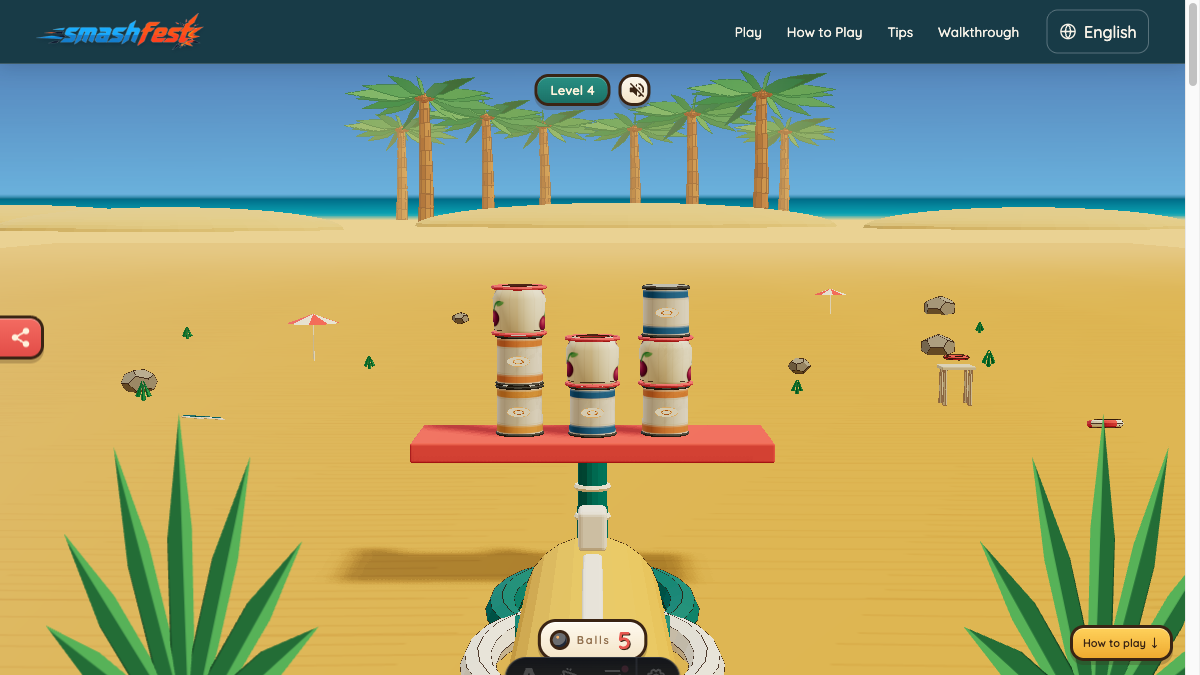
Level 4 introduces a tower pattern made from eight tin and glass objectives. The layout spans two sides of the center, rises through three rows, provides five cannonballs, and sets par at three. The level's strategy is cascade: a successful run uses movement from one part of a tower to create the next contact instead of assigning one ball to every visible target.
Mixed materials make the collapse readable. Glass can disappear when struck, while tin can survive and carry momentum into another target. Your first decision is therefore structural, not cosmetic: choose the lower contact that lets a moving tin piece or falling glass open the center. Then wait to see whether the opposite tower joins the chain before spending the second shot.
Cannonballs
5Materials
Tin · GlassPar
3Targets
8Read two towers as one connected problem
The objectives occupy left and right zones with vertical contacts inside each tower. Although the groups look separate, pieces falling inward can cross the center and disturb the other side. A low inner support has more cascade potential than a high outer piece because its motion points into the shared area.
The eight-target count is small enough to track after each shot. Use the remaining-objective counter together with the scene: broken glass is resolved, tin must leave the platform, and a leaning tower may still be stable. With a three-shot par and two reserve balls, the aim is to create one broad opening, one deliberate second collapse, and one cleanup if needed.
Opening plan: send the first tower inward
Target the low inner portion of either tower. An inward line encourages the disturbed pieces to enter the gap between the groups, where they can contact the other structure. Avoid driving the outside face farther away from every other target; that may clear one can but reduce the cascade opportunity.
Once the first tower begins moving, keep the second ball. Watch whether tin rolls across the center or glass falls into the opposite base. If the second tower begins to lean, let it finish. If it remains vertical and quiet, its low inner support becomes the next target.
Step-by-step Level 4 plan
Open through an inner base
Choose one tower and aim low on its center-facing side. Fire a single ball along a line that carries motion toward the gap rather than away from the level.
Observe the cross-center cascade
Wait for falling glass and moving tin to finish crossing the middle. Confirm whether the opposite tower changed angle or lost a target before planning shot two.
Collapse the stable tower
If the other side stayed upright, mirror the first low-inner aim there. If it already fell, direct shot two at the strongest stable remnant instead of repeating the pattern.
Use shot three for material-aware cleanup
Break isolated glass with a direct hit. Push isolated tin through its center toward the nearer edge. Keep the two reserve balls until the third shot has settled.
Why an inward cascade saves shots
Tower targets have useful height but narrow support. Disturbing a low inner contact turns that height into rotation toward the center. Glass contributes removal and falling impacts; tin contributes mass and continued motion. When those behaviors meet in the shared gap, one cannonball can influence targets in both groups.
The pause after the opening is essential because the chain is not instantaneous. A tin target may roll after glass has already broken, and its later contact can finish a tower that initially looked stable. Treat the scene as active until both motion and the target counter stop changing.
Alternative when both towers fall outward
If the first impact sends pieces away from the center, switch from cascade building to edge cleanup. Identify the side with the most live tin and push those targets toward the closest edge. Directly break any stable glass that cannot be reached by the moving tin. The five-ball allowance gives recovery room, but wait between every correction.
Common Level 4 mistakes
Hitting the outside face
Outward force can separate the towers without letting either group disturb the other, reducing chain value.
Assuming fallen tin is cleared
A can on its side remains an objective until it leaves the play surface. Use the counter to verify.
Firing into the center too soon
The shared gap becomes busy during a cascade. A second ball may miss or redirect useful moving pieces.
Level 4 replay checklist
- The opening moved one tower toward the shared center.
- Cross-center contacts finished before shot two.
- The stable remainder, not the original layout, chose the second aim.
- Glass and tin received different cleanup lines.
- The third shot remained a cleanup rather than an automatic follow-up.
Continue learning
Replay Level 4 from the browser game, then compare the result with the material and support principles in the related guides. Physics can settle differently after small aim changes, so use the visible target count as the final check.